






The Journal
The Wonderful World of William Morris
Designer, poet, novelist, publisher, political activist and enthusiastic student of just about anything that caught his attention, Morris was not a man who believed in doing things by halves.

THE WONDERFUL WORLD OF WILLIAM MORRIS
Some people have a hobby. William Morris had approximately seventeen.
Designer, poet, novelist, publisher, political activist and enthusiastic student of just about anything that caught his attention, Morris was not a man who believed in doing things by halves.
Today, his name is most closely associated with elaborate floral wallpapers and textiles. But behind the flowers and winding stems was a man with some very strong opinions, an extraordinary number of interests and a remarkable ability to turn them into entirely new careers.
NOT YOUR AVERAGE VICTORIAN
Born in 1834 into a wealthy family, Morris enjoyed a childhood with opportunities most Victorian children could only dream of. Thanks to his father's successful investments, he grew up with the freedom to pursue his interests without the immediate inconvenience of having to earn a living.
Much of his childhood was spent exploring the Essex countryside, developing a fascination with plants, wildlife and medieval buildings. He even cultivated a small garden of his own. Those early interests would eventually find their way into some of Britain's most recognisable designs.
Initially, however, Morris had quite different ambitions. He arrived at Oxford University intending to enter the Church. There he met Edward Burne-Jones, who would become a lifelong friend and collaborator, and soon found himself drawn into the world of art and medieval literature.
His plans for the clergy were abandoned, and a rather more colourful career began.
A HOUSE FULL OF ARTISTS
In 1859, William Morris married Jane Burden, and the couple moved into Red House, designed by his good friend, the architect Philip Webb.
Morris enlisted his artistic friends to help decorate the house, filling it with embroidered textiles, painted walls and specially designed furniture. Depending on how much you trust your friends’ taste, this is either the best idea we’ve ever heard or the absolute worst.
In 1861, Morris and six friends established the business that would eventually become Morris & Co. While Victorian Britain was busy embracing factories and mass production, Morris was heading in quite the opposite direction. He believed that everyday objects deserved beautiful design and proper craftsmanship, even if making them took a little longer.
The business first found success decorating churches before turning its attention to the wallpapers, textiles and furnishings that would make Morris & Co. a household name.
A FEW STRONG OPINIONS
Morris was also a passionate political campaigner, advocating for workers' rights, traditional craftsmanship and the preservation of historic buildings.
There was an interesting contradiction in his beliefs. Born into considerable wealth, he became a committed socialist who believed that beauty and well made objects should be accessible to everyone.
Unfortunately, the painstaking craftsmanship behind his own designs made them too expensive for many of the people he hoped would enjoy them. It was a difficulty he never entirely resolved, but his determination to protect traditional skills helped shape the Arts and Crafts Movement and influenced generations of designers. For someone so fascinated by the past, Morris had an extraordinary influence on the future.
A LEGACY IN FULL BLOOM
More than a century after his death in 1896, Morris's designs remain instantly recognisable. His flowers, foliage and mischievous birds continue to appear in homes and wardrobes around the world. This October, they find themselves somewhere new.
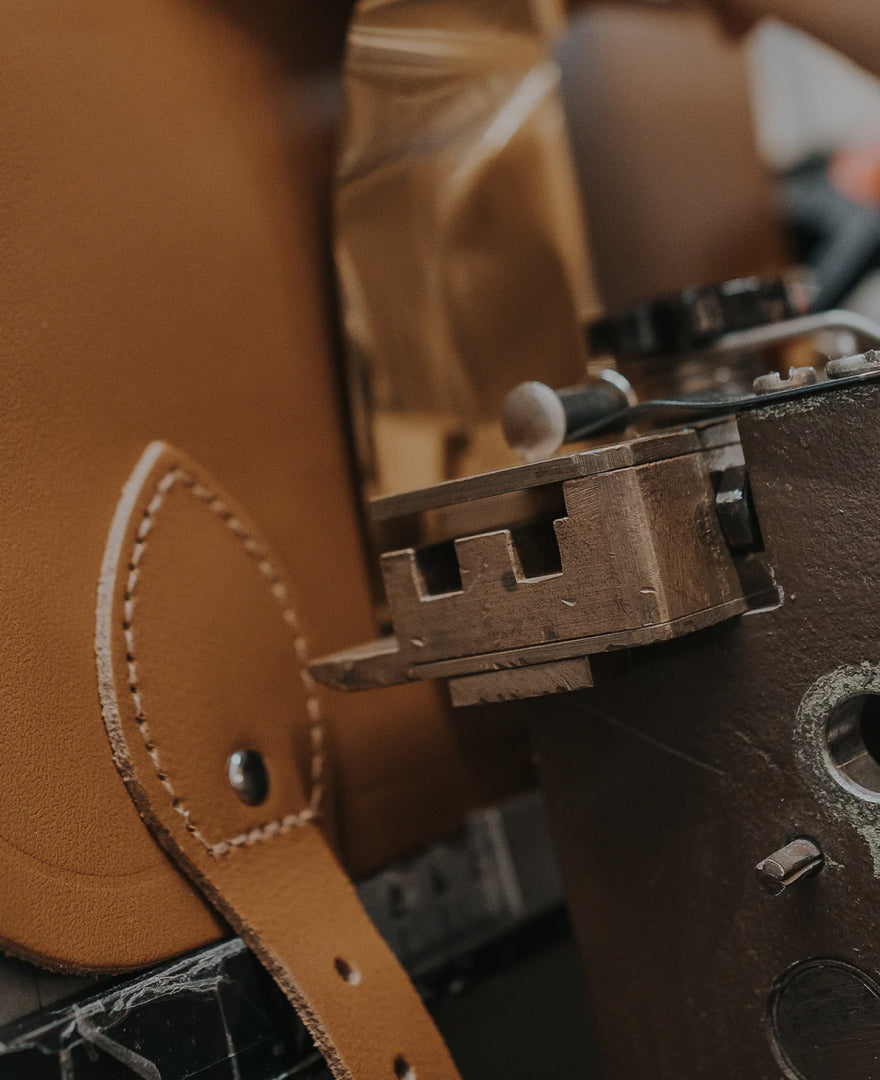
Cambridge Satchel and Morris & Co. have come together for a limited edition collection, bringing his celebrated botanical patterns to some of our best loved leather silhouettes. William Morris had plenty to say about the way things should be made. We like to think he would have approved of a satchel made by hand in England.